Guide
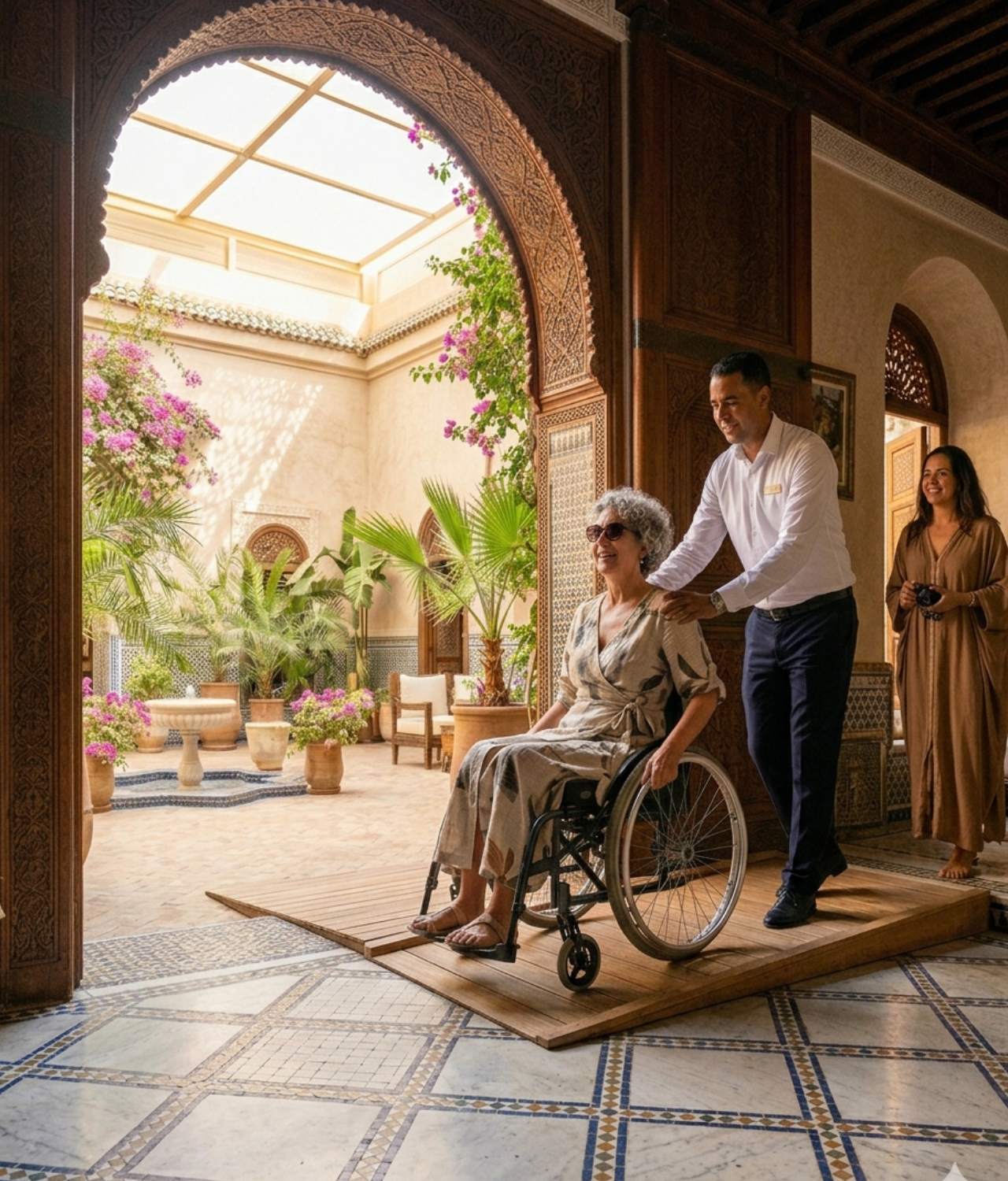
What to know, what to ask, and how a genuinely accessible desert evening can be planned in advance.
The Agafay is one of the most rewarding short trips from Marrakech — but most of what's written about it assumes every visitor can walk across loose gravel, climb into a 4x4, and duck under a tent flap without a second thought. If you use a wheelchair, that gap in the information is the real barrier, more than the terrain itself. This guide is meant to close it: an honest look at what the Agafay is actually like to navigate, and what a properly planned, accessible evening requires.
None of this is about limitation. It's about information — the kind that lets you make a confident decision instead of an uncertain one.
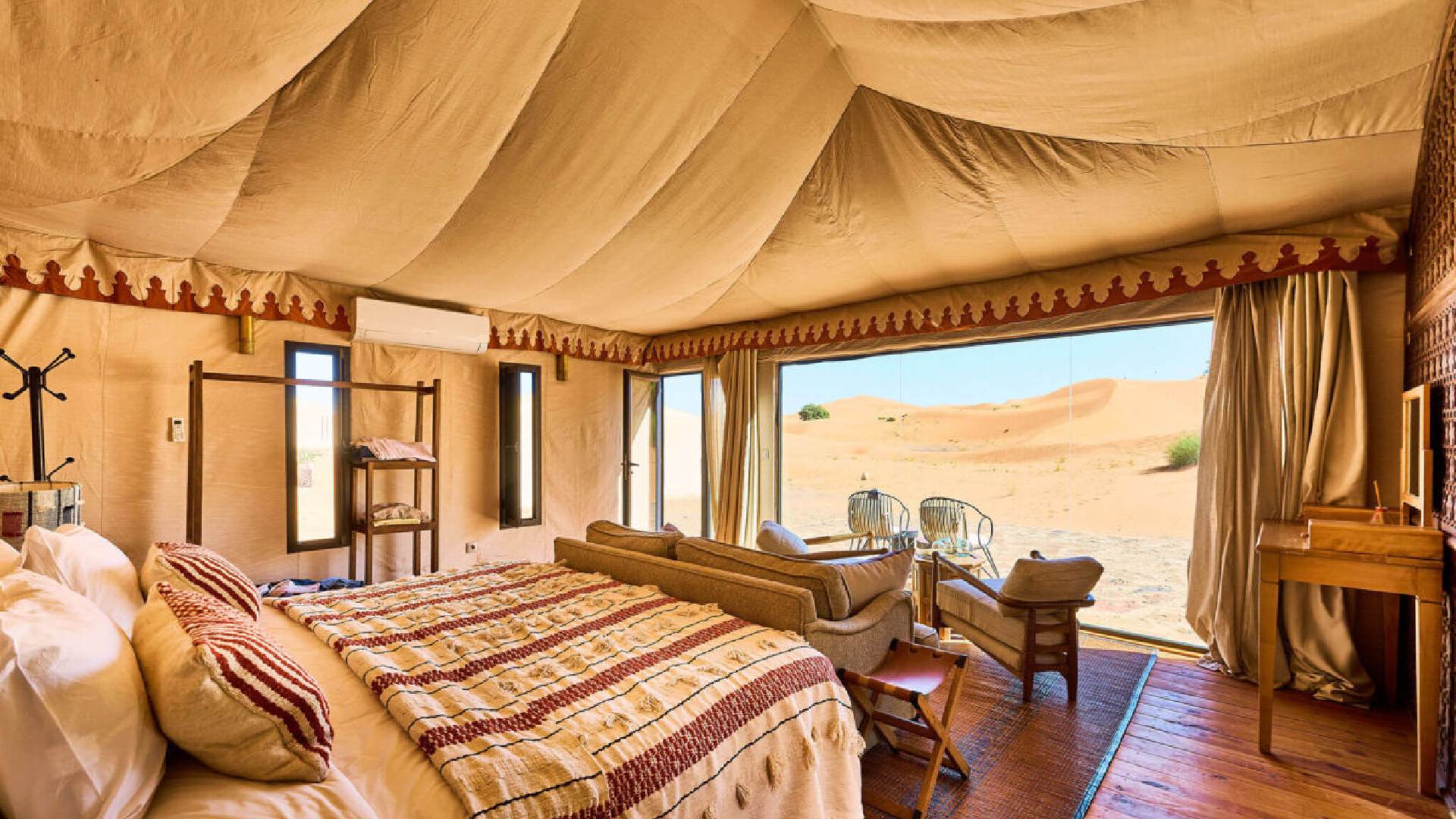
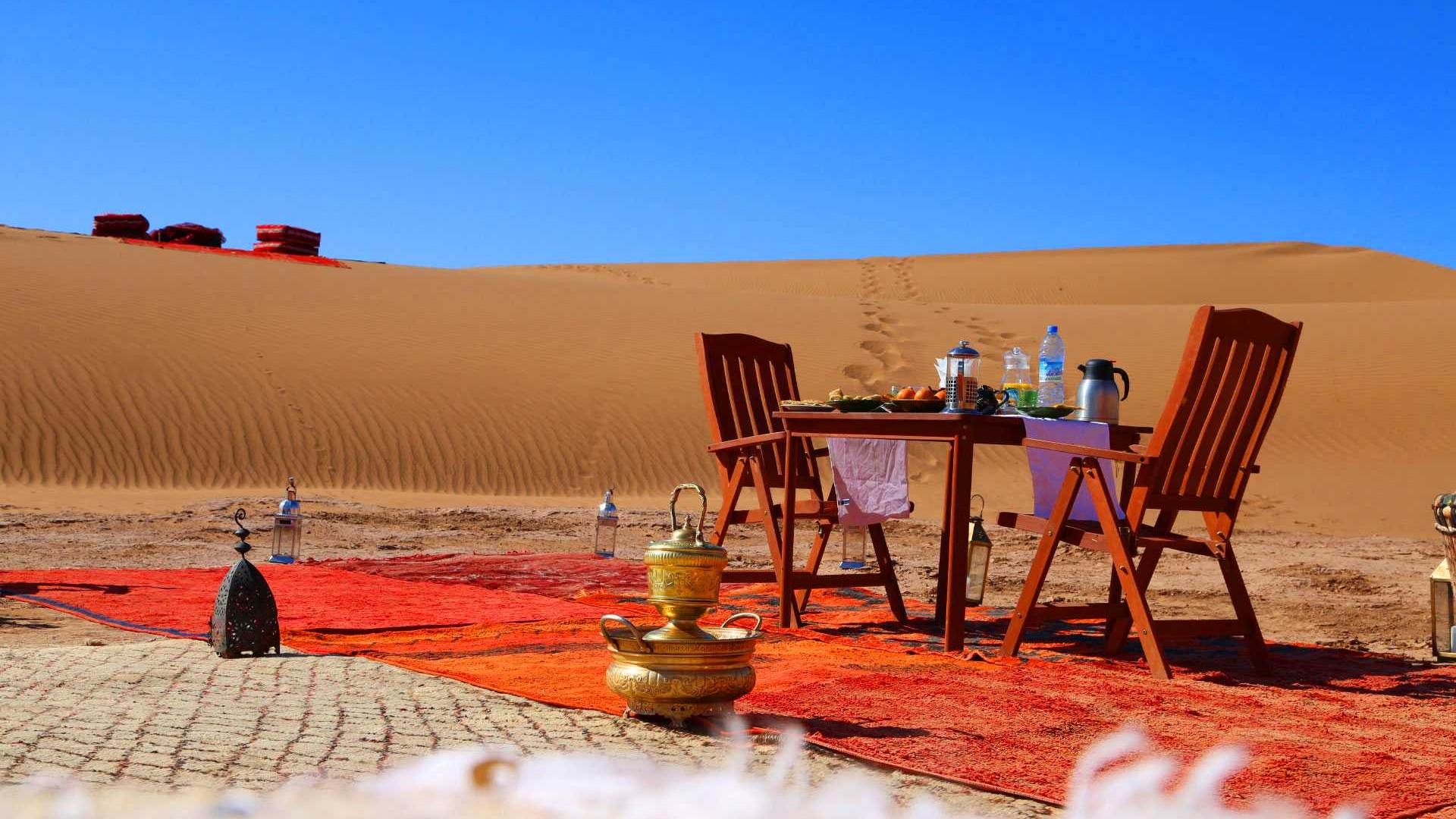
Be clear-eyed about this from the start: the Agafay is a rocky, undulating desert plateau, not flat sand or paved ground. Paths between a vehicle drop-off, a dining area and a viewpoint are often uneven, loose underfoot, and rarely graded for wheels. Most fixed camps were built with walking guests in mind and haven't been adapted — tents frequently have a raised threshold or step, seating areas are set directly on sand or gravel, and staff aren't necessarily trained in providing physical assistance. This is simply the reality of most commercial camps in the region, and it's worth knowing before you book anything, not after you arrive.
None of this means the Agafay is off-limits. It means the standard, off-the-shelf camp package usually isn't built for it — and a different kind of planning is needed instead.
If you're evaluating a desert evening — with us or with anyone else — these are the questions worth asking directly, before you pay for anything:
A vague or overly reassuring answer to any of these is worth treating with caution. A specific, concrete answer — naming the vehicle type, describing the actual distance in meters, confirming exactly what assistance is available — is the sign of an operator who has actually thought it through rather than one who is simply agreeing to avoid losing a booking.
The reason most fixed camps struggle here is structural: they run a set nightly schedule built around a shared, standardized format, which leaves little room to adjust terrain, seating or transport for one guest's needs. A private, concierge-led evening works differently. Because the entire itinerary is designed around your group rather than fitted into someone else's schedule, decisions like vehicle type, the specific site chosen for dinner, and the distance between parking and seating can all be planned in advance rather than discovered on arrival.
This is the approach behind our own accessible luxury travel service — adapted transportation, personally vetted accessible setups, and a dedicated concierge who manages the logistics discreetly, so the evening itself can simply be enjoyed rather than navigated. It's not a separate, scaled-down product; it's the same caliber of Agafay evening we design for every guest, adjusted at the planning stage to fit real mobility needs.
The more specific you can be up front, the better the plan will be. It's genuinely useful to share:
None of this needs to be shared publicly or repeated to multiple operators — a single detailed conversation with a concierge who can act on it is worth more than several vague email exchanges. Our own desert experiences can be adapted along exactly these lines when arranged in advance.
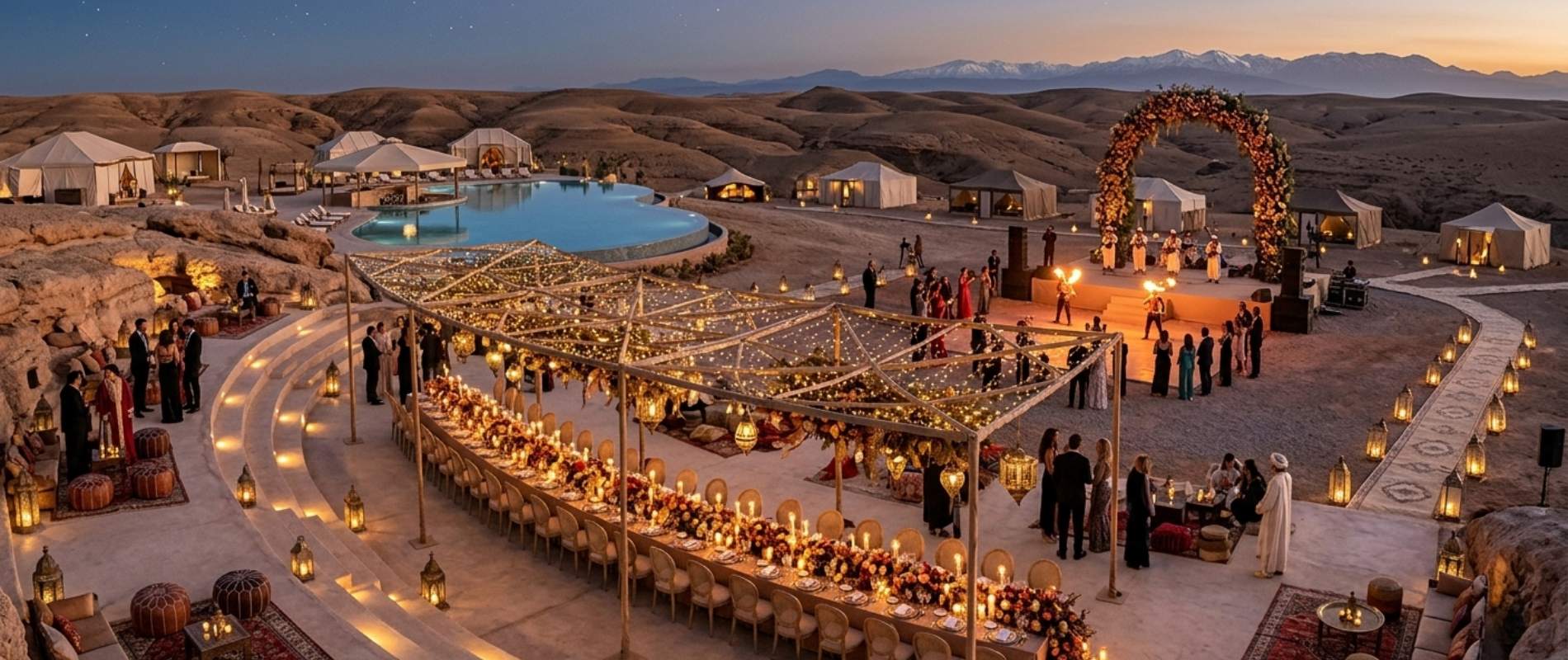
Even with the best planning, it's worth being realistic: a rocky desert plateau will never move and behave like a paved courtyard, and some elements — walking directly onto open sand for a photo, for instance — may simply require assistance or a slightly different vantage point. The goal of proper planning isn't to erase the terrain; it's to remove the avoidable obstacles — the ones caused by a lack of preparation rather than the landscape itself — so what remains is simply the actual desert, experienced comfortably. For a fuller picture of what an Agafay evening generally involves, our ultimate guide to the Agafay Desert covers the format most camps follow.
"Luxury means the details are handled before you arrive — accessibility should mean exactly the same thing."
— Nexus Marrakech
Most are not, by default. Fixed camps are typically built for walking guests, with uneven terrain, stepped tent entrances and floor-level seating. Accessibility usually requires planning in advance with an operator who can adapt transport, seating and terrain specifically.
Ask specifically about vehicle type, the terrain and distance between parking and seating, whether an accessible restroom is available, and whether staff are briefed to provide physical assistance. Vague reassurances without specifics are worth treating with caution.
Yes, in a private, tailor-made itinerary these are optional. A planned-in-advance evening can be built around dining, atmosphere and views alone if that's your preference.
As early as practical. The more notice a concierge team has, the more precisely vehicle, site and seating can be matched to your specific needs rather than adapted last minute.
Share your mobility needs and preferences, and our concierge team will plan an Agafay evening around them — discreetly and in advance.
Plan Your Experience