Guide
Temperatures, light and crowds change more than you'd expect across the year — here's what to know before you pick your dates.
Unlike the Sahara proper, the Agafay is forgiving — its proximity to Marrakech and the Atlas foothills means it rarely becomes unworkable the way a deep desert crossing can. But that doesn't mean every month feels the same. The light shifts, sunset times move by nearly two hours across the year, and summer afternoons demand a different kind of planning than a cold December night. Here's an honest, month-by-month look at what to expect, so you can choose dates that suit the experience you're after rather than just the flight prices.
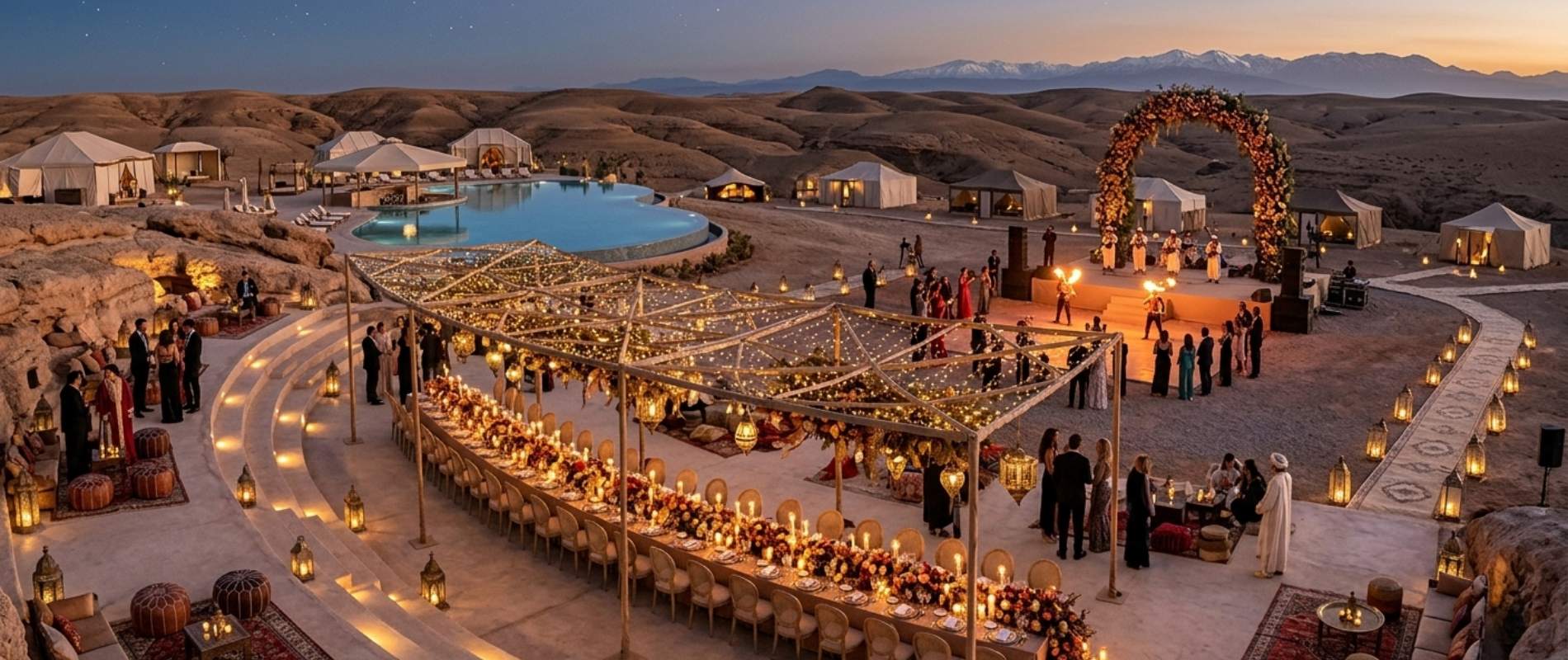
If you can choose freely, these are the months worth building your trip around. Daytime temperatures sit comfortably between 22°C and 30°C, evenings cool gently rather than dropping sharply, and the light across the plateau at golden hour is exceptional — soft, warm, and lingering rather than harsh. These months also line up with pleasant conditions in Marrakech itself, so you're not trading city comfort for desert comfort. It's no coincidence that most weddings, proposals and celebration dinners in the Agafay cluster into these windows.
Summer afternoons in the Agafay can be genuinely intense, often climbing past 40°C in the exposed, shade-free terrain. That rules out most daytime activity, but it doesn't rule out the Agafay altogether — because almost everything worth doing there happens in the evening anyway. Once the sun drops, temperatures fall quickly and comfortably, and a well-timed sunset arrival with dinner and stargazing afterward remains one of the best experiences of the year, minus the crowds that fill the shoulder seasons. If you're traveling in summer, just avoid any itinerary that has you outdoors and active during the early afternoon.
Winter days in the Agafay are usually mild and pleasant, often in the high teens to low twenties Celsius, with clear skies that make for some of the best stargazing conditions of the year — cold, dry air and minimal haze. The catch is what happens after dark: temperatures can drop close to freezing, especially in January, and the difference between a well-prepared evening and an uncomfortable one comes down almost entirely to layers. If you're visiting in winter, pack accordingly — we cover exactly what to bring in our guide to packing for a luxury desert camp.
Sunset in the Agafay moves from around 6:00pm in December to closer to 7:45pm in June, which has a real effect on how an evening is structured. In winter, dinner and activities compress into a shorter window after a relatively early sunset; in summer, there's a longer stretch of daylight to fill before the light turns, which is when a private, unhurried itinerary makes the biggest difference. Fixed-schedule group camps often run the same timetable year-round regardless of when the sun actually sets — one of several reasons a private evening tends to feel better matched to the season. We go into this comparison in more depth in our guide to private versus group desert tours.
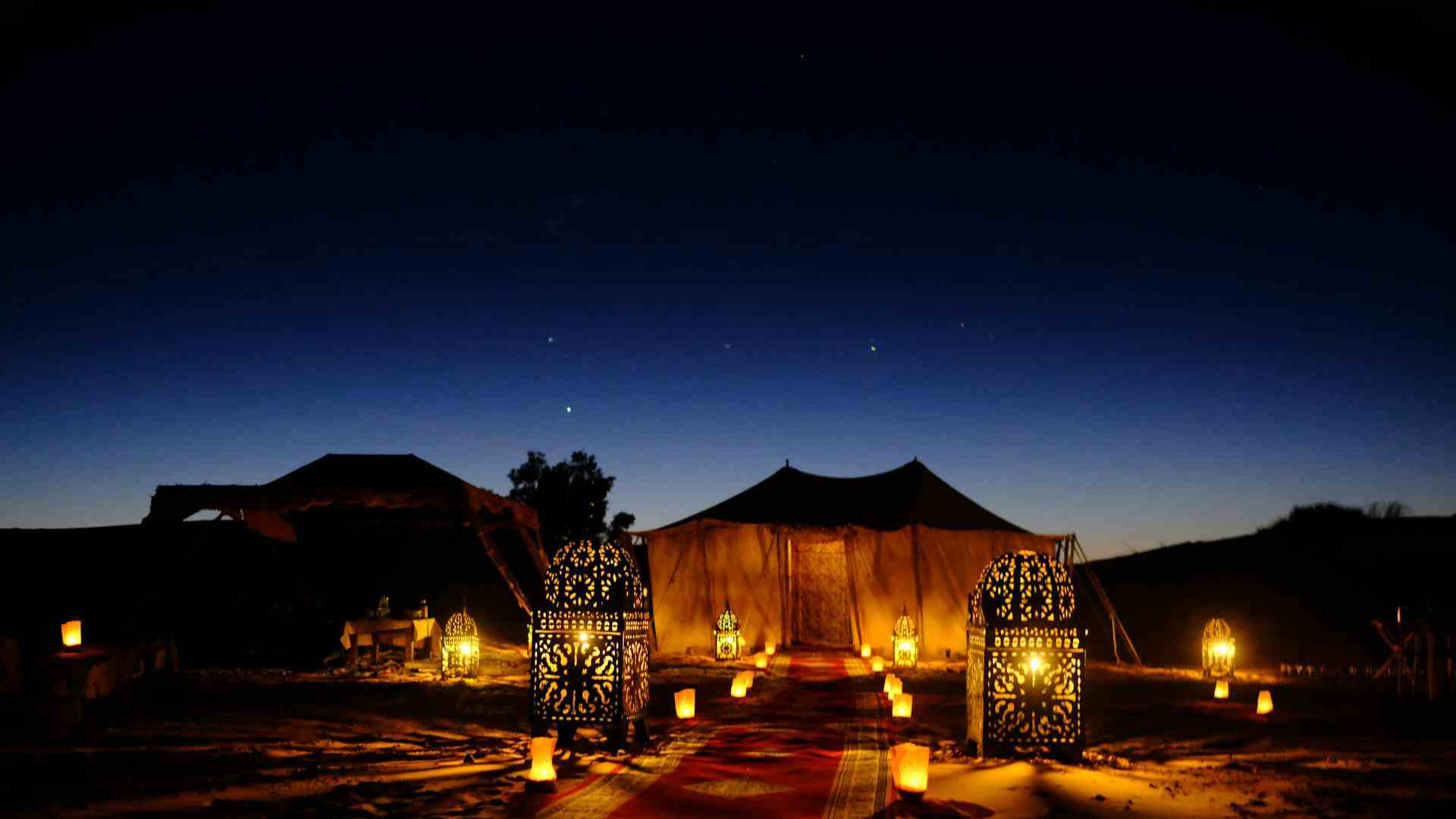
The Agafay's biggest advantage over Marrakech itself is darkness, and that holds true year-round. That said, winter and early spring tend to offer the clearest, driest skies, while summer's warmer, more humid air can occasionally soften visibility. New moon dates are worth checking regardless of season if stargazing is a priority for your evening — our concierge team can help align your dates when you're planning through our contact page.
The Agafay gets noticeably busier during Moroccan public holidays, Eid periods, and the peak international travel weeks around Easter, Christmas and New Year — camps that run fixed group schedules can feel considerably more crowded during these stretches. If you're set on visiting during one of these windows, a private, tailor-made evening becomes even more valuable, since it isn't affected by how many other groups have booked the same night. Our Exclusive Marrakech & Agafay Experience is designed exactly this way — one private evening, regardless of how busy the wider desert gets.
"There's no wrong season for the Agafay — only the wrong hour. Choose your time of day as carefully as your month."
— Nexus Marrakech
March through May and September through November generally offer the most comfortable temperatures and the best light for photography, with warm days and gently cooling evenings.
Midday heat can be intense, but evenings remain very pleasant. Since most Agafay experiences happen around sunset and after dark, summer is still a good time to visit as long as the itinerary avoids extended outdoor activity in the early afternoon.
Yes. Days are usually mild, but temperatures can drop close to freezing after dark between December and February. Layers, a warm outer layer and closed shoes make a significant difference to comfort.
Clear, dry conditions in winter and early spring tend to offer the sharpest night skies, though the Agafay's distance from city light makes stargazing rewarding throughout the year. Checking the moon phase for your travel dates is worth doing if it's a priority.
Share your travel dates and our concierge team will design a private Agafay experience suited to the season and the light.
Plan Your Experience